
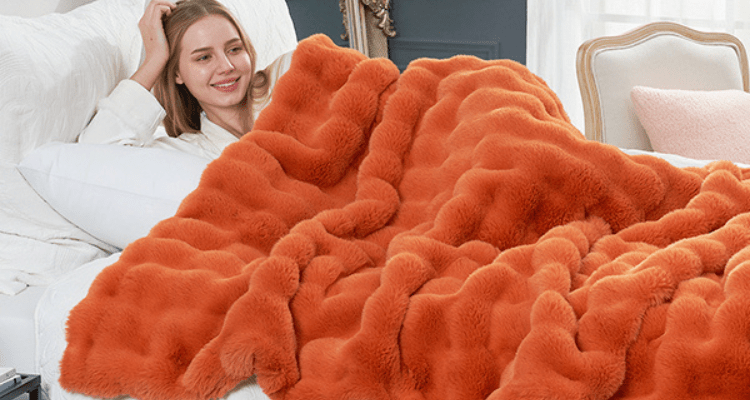
A winter blanket should help you feel warm and comfortable without making the bed or sofa feel bulky. More weight does not automatically mean more warmth, and for many people, a very heavy blanket can be harder to move under, more difficult to wash, and less comfortable once the room warms up.
The better approach is to think about how the blanket will be used, how warm the room already is, and what kind of texture feels comfortable to you. A blanket for an hour on the sofa has different requirements from one you plan to sleep under all night.
Start With Where You Will Use the Blanket

Before comparing thickness or materials, decide whether the blanket is mainly for the sofa or the bed. A warm throw blanket for the living room only needs to cover one person comfortably, so a lighter option is often easier to handle. It can add warmth while you read or watch TV without creating a large pile of fabric around you.
For the bed, coverage matters more because the blanket is likely to stay in place for much longer. Room temperature matters too. If your bedroom already feels warm, choosing the thickest winter blanket available may leave you uncomfortable later in the night. If the room is cooler, a warmer layer can make more sense.
Sleep Foundation notes that a cooler bedroom is generally more comfortable for sleep and recommends adjusting bedding layers rather than simply making the room warmer. That is a useful way to think about winter bedding: choose enough warmth for comfort, but keep the setup easy to adjust.
Warmth and Weight Are Not the Same Thing
It is easy to assume that the heaviest blanket will also be the warmest, but weight is only one part of the picture. Warmth also depends on how the fabric is constructed, how much air it traps, and how the surface interacts with the layers underneath it.
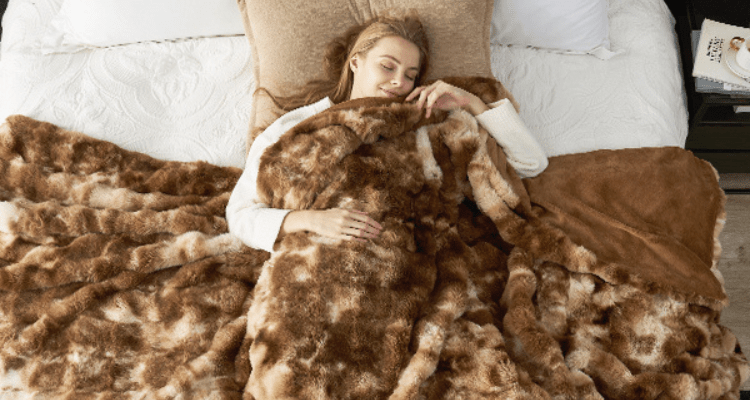
A blanket with a soft, lofty texture can feel warm without being especially dense. Plush and faux fur styles, for example, often create a cozy feeling because the raised fibers hold pockets of air around the body. That can be useful if you want winter comfort without the sensation of a very heavy layer pressing down on you.
Instead of judging a blanket only by thickness, think about how easily you can move, adjust, or fold it. If it is difficult to pull up or push aside, it may feel more cumbersome than cozy.
Choose Texture Based on the Kind of Comfort You Like

Texture affects more than appearance. It changes how a blanket feels when you first pull it over you and how much warmth it seems to provide.
Plush or faux fur blankets often feel immediately warm and soft, which makes them well suited to cold evenings on the sofa or for anyone who likes a more enveloping feel. Smoother, lighter blankets can still provide useful warmth but tend to feel less bulky, especially in bed.
If you usually warm up quickly after falling asleep, a lighter texture may be easier to manage. If you tend to stay cold while reading or watching TV, something more plush may feel better. The right choice is not about which material sounds the warmest on paper; It is about how you actually like to use a blanket.
Layering Gives You More Control
For people who dislike heavy bedding, layering is often more practical than relying on one very thick blanket.
A lighter winter blanket can be added over an existing comforter or duvet when the temperature drops, then removed when the room feels warmer. This gives you more control from night to night instead of committing to one heavy setup for the entire season.
The same idea works in the living room. A lightweight throw may be enough most evenings, while colder nights may call for an extra layer. Sleep Foundation also recommends using bedding in removable layers so you can adjust warmth as needed rather than relying on a single fixed setup.
This approach is especially useful in places where fall and winter temperatures change frequently. Several flexible layers can be more useful across the season than one blanket that only feels comfortable on the coldest nights.
Do Not Ignore Blanket Size
Extra fabric adds weight even when the material itself is not especially heavy.
For sofa use, an oversized blanket may look inviting, but a standard throw is often easier for one person to manage. It gives enough coverage for the legs and body without constantly slipping to the floor or bunching around the feet.
For bed use, the blanket should be large enough to provide the side coverage you want but not so oversized that it creates unnecessary overhang. Couples may appreciate a little extra width, but there is no advantage in choosing significantly more fabric than you actually need.
Checking the actual dimensions is more useful than simply assuming a larger size will feel cozier.
Consider a Heated Blanket if You Want Warmth Without More Bulk
If the goal is extra warmth rather than extra fabric, a heated blanket can be another option.
Adjustable heat can provide warmth without stacking several thick layers on top of the body. A heated throw works well for one person on the sofa, while larger heated blankets may be better suited for bed use.
When choosing one, look for straightforward controls, several heat settings, a timer, automatic shutoff, and clear care instructions. Electric bedding should always be used according to the manufacturer’s directions, and damaged cords, connectors, or worn areas should not be ignored.
A heated blanket does not need to replace normal bedding. It can simply be the extra layer you use when the room feels colder than usual.
Think About Washing and Storage Before You Buy
A blanket that feels perfect in December can become inconvenient in March if it is difficult to wash or takes up most of the closet.
If you expect to use the blanket every day, check the care instructions before buying. Plush, faux fur, knit, and heated blankets can all have different washing and drying requirements. This matters even more in homes with pets, children, or frequent sofa use, where blankets may need cleaning more often.
Storage matters too. A bulky blanket may require more closet space than you expect, while a lighter option is easier to fold and rotate with the seasons. Practical care is part of long-term comfort, not something to think about only after the first wash.
Match the Blanket to the Person, Not Just the Weather

Two people can sleep in the same room and still want completely different bedding. One may feel cold all evening, while the other warms up quickly under even a light blanket.
That is why terms like warm blanket, winter blanket, and cozy blanket should be treated as starting points rather than guarantees. Someone who is always cold may prefer a plush texture or heated option. Someone who tends to sleep warm may be happier with a lighter blanket that can be added or removed as needed.
The same applies to sofa use. If the blanket is mainly for movie nights or reading, softness and easy handling may matter more than maximum insulation.
Warm Does Not Have to Mean Heavy
A comfortable winter blanket is really about balance. It should provide enough warmth for the space and the person using it without making the bed or sofa harder to manage.
Start with the room and the way you plan to use the blanket, then look at texture, size, weight, care, and whether layering would give you more flexibility. If regular blankets still do not provide enough warmth, a heated option can add more without requiring several bulky layers.
The best winter blanket is not necessarily the thickest or heaviest one. It is the one that keeps you comfortable and is easy enough to use throughout the season.
FAQs
What type of blanket is warm without being too heavy?
Plush, faux fur, and other lofty blankets can feel warm without being extremely dense. Lightweight blankets can also work well when layered with existing bedding.
Is a thicker blanket always warmer?
Not necessarily. Warmth depends on the fabric, construction, texture, and how well the blanket traps air, not only on thickness or weight.
Is it better to use one heavy blanket or several lighter layers?
Several lighter layers are often easier to adjust. You can remove or add a layer as the room temperature changes, which gives you more control throughout the night.
What size winter blanket should I choose?
Choose according to where you will use it. A throw is usually enough for one person on a sofa, while a bed blanket should match the mattress and the amount of side coverage you prefer.
Are heated blankets useful if I do not like heavy bedding?
They can be. A heated blanket adds adjustable warmth.


Hinterlasse einen Kommentar
Diese Website ist durch hCaptcha geschützt und es gelten die allgemeinen Geschäftsbedingungen und Datenschutzbestimmungen von hCaptcha.