
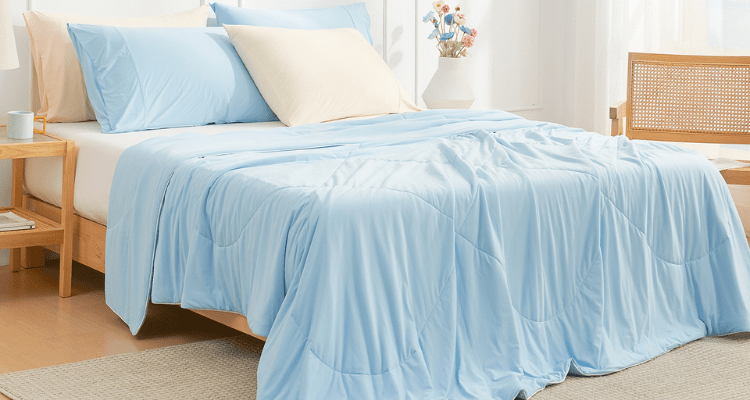
If you sleep hot, changing the comforter can make a noticeable difference in how the bed feels at night. But “cooling” is also one of those words that appears on a lot of bedding, so it is reasonable to wonder what it actually means and whether a cooling comforter will feel different from a regular one.
The short answer is that it can, especially if you normally sleep under a heavy comforter and often feel too warm. A cooling comforter does not actively refrigerate the bed or lower your core body temperature. Its main job is to feel cooler against the skin, manage heat more effectively, and avoid trapping as much warmth as heavier bedding.
Cooling Is About How the Bedding Feels and Handles Heat

Most cooling comforters combine a smoother, cooler-touch surface with a lighter construction. That changes the way the bed feels when you first get in and can also reduce the heavy, stuffy feeling some people experience under thicker bedding.
This difference was noticeable in two recent editorial tests. A Dorm Therapy reviewer who normally slept under a heavy comforter with the air conditioner set to 67°F tested a lightweight cooling comforter for two weeks. She said the lighter weight took some adjustment at first, but she preferred being able to stay covered without the same overheated feeling she associated with her usual setup.
An Apartment Therapy style editor had a similar reason for changing her bedding. She liked sleeping in a cold room but found her heavier duvet uncomfortable once summer arrived. After switching to a cooling comforter, she specifically noticed that the underside felt cool to the touch and that the lighter construction worked better for her during warm weather.
Lightweight Can Be an Advantage, but It Feels Different
One thing people often underestimate is how much the weight of bedding affects the experience.
If you are used to a thick duvet or plush comforter, a cooling comforter may initially feel surprisingly thin. Both editors mentioned this. The Dorm Therapy reviewer needed several nights to adjust because she was used to the almost weighted feeling of a heavier comforter, while the Apartment Therapy editor also noted that moving from a fluffy duvet to a thinner comforter changed the look and feel of the bed.
That does not make lightweight bedding better for everyone. Some sleepers genuinely enjoy heavier covers, especially in winter. But if your main problem is waking up too warm or feeling trapped under thick bedding, less weight may be exactly what makes the bed more comfortable.
Before buying, think about what you actually like about your current comforter. If you love its weight but dislike how warm it feels, switching to a very light cooling comforter may require some adjustment.
The Surface Fabric Matters More Than the Marketing Word “Cooling”

Two products can both be labeled “cooling” and still feel quite different.
The Lightweight Cooling Comforter tested by Dorm Therapy was described as smooth and almost silky, with a noticeable cool feel on contact. The reviewer tested it directly against the skin without adding a duvet cover, which is important because adding another fabric layer can reduce how much of that surface sensation you notice.
The Seersucker Plaid Cooling Comforter tested by Apartment Therapy offered a slightly different experience. The editor highlighted the smooth cooling underside but also liked the raised seersucker texture on top because it made the comforter look more finished than some thinner cooling bedding.
This is why buying based only on the word “cooling” is not enough. Look at which side of the comforter is designed to feel cool, whether it works best without a duvet cover, and whether you actually like the texture against your skin.
A Cooling Comforter Still Has to Look Good on the Bed
Performance matters, but so does appearance. If a comforter stays on the bed every day, most people do not want something that looks overly technical or noticeably flimsy.
This came up clearly in the Apartment Therapy review. The editor liked the seersucker texture because it disguised some of the stitching commonly visible on thinner comforters and made the finished bed look more intentional. She also noted that the product remained thin, so people switching from a large fluffy duvet should expect a different silhouette.
That is a useful point to consider before buying. If you like a very full, hotel-style bed, check product photos carefully and look at the fill and thickness rather than assuming every comforter will create the same shape.
Think About Washing, Pets, and Everyday Use
Cooling bedding still has to function like normal bedding. If you have pets on the bed, wash your comforter frequently, or prefer white bedding, maintenance can matter just as much as the initial cooling feel. In the Apartment Therapy test, the editor specifically discussed living with a cat and noted that pet hair did not cling as noticeably to the surface as it had to her previous white duvet cover. She also washed the comforter multiple times during the testing period.
Care instructions are worth checking before you buy because cooling fabrics may have more specific washing and drying recommendations. A comforter that feels great but is inconvenient for your normal laundry routine may not be the best long-term choice.
Who Is Most Likely to Notice the Difference?
Cooling comforters make the most sense for people who like sleeping under a comforter but regularly feel too warm underneath one. They can also be useful during summer, in warmer climates, or in homes where a thick duvet feels excessive for much of the year.
The two editor tests are good examples because both reviewers shared a similar problem: they liked sleeping under a comforter, but their usual bedding pushed them toward colder room temperatures during warm weather. In both cases, changing the bedding altered the way they managed nighttime comfort.
If you already sleep comfortably under your current bedding, there may be no strong reason to switch. And if you mainly want a heavy, enveloping feeling, a lightweight cooling comforter may not give you the experience you prefer.
What to Check Before Buying a Cooling Comforter

Rather than focusing on one technical claim, look at the whole product. Start with the weight and thickness, because those will affect how different the comforter feels from what you currently use. Check whether the cooling surface needs direct skin contact, how the product should be washed, and whether you can use it with a duvet cover without changing the intended feel.
Size matters too. Some people prefer a comforter that sits neatly on top of the mattress, while others want more drape around the sides. If you have pets, pay attention to how easily the fabric collects hair and how often it can realistically be washed.
Finally, look at independent testing when it is available. Real-world reviews will not tell you exactly how a comforter will feel to you, but they can reveal details that are easy to miss on a product page, including weight, appearance, laundry care, and the adjustment period when switching from heavier bedding.
So, Do Cooling Comforters Really Work?
They can make a real difference in comfort, but the effect is usually more practical than dramatic. The biggest changes come from a cooler-touch surface, lighter construction, and less heat being trapped around the sleeper.
The two editor tests from Dorm Therapy and Apartment Therapy both show that the experience depends on what you are switching from. Someone used to a thick comforter may notice a major difference in weight and heat retention, while someone already sleeping under lightweight bedding may find the change more subtle.
The best cooling comforter is therefore not necessarily the one with the strongest claim on the label. It is the one whose weight, surface feel, care requirements, and overall design fit the way you actually sleep.
FAQs
Do cooling comforters actually stay cool all night?
They are designed to manage heat and feel cooler than heavier conventional bedding, but the sensation will vary depending on the fabric, room temperature, other bedding layers, and the individual sleeper.
Are cooling comforters only for summer?
No. Some people use them through spring and fall, in warmer climates, or year-round if they naturally sleep hot. The Dorm Therapy reviewer specifically described the tested comforter as useful beyond summer as well.
Are cooling comforters thinner than regular comforters?
Many are lighter and thinner than traditional plush duvets. Both editor tests discussed adjusting to a lighter feel compared with heavier bedding.
Should I use a duvet cover with a cooling comforter?
It depends on the product. If the cooling sensation comes from direct contact with a specific surface fabric, adding a duvet cover may reduce that effect. Always check the manufacturer’s instructions.
What should hot sleepers look for in a cooling comforter?
Look at weight, surface feel, breathability, care instructions, size, and whether the comforter is comfortable enough to use without adding heavy layers on top.


Dejar un comentario
Este sitio está protegido por hCaptcha y se aplican la Política de privacidad de hCaptcha y los Términos del servicio.