
Not all bedding feels the same once you actually sleep in it. Two sets may look equally soft in product photos, but after several hours in bed, differences in surface texture, drape, and moisture handling can become much more noticeable.
That is where TENCEL bedding tends to stand out. Made with TENCEL Lyocell fibers, it is known for a smooth hand feel, fluid drape, and effective moisture management. For shoppers comparing TENCEL sheets, Lyocell sheets, and more conventional bedding, the real difference is less about one dramatic feature and more about how the fabric feels over the course of the night.
If you are still deciding whether this material fits your home, our earlier TENCEL bedding guide goes deeper into how it works for everyday family sleep.
TENCEL Bedding vs Regular Bedding at a Glance
“Regular bedding” can include many different fibers and fabric constructions, so there is no single standard feel. The comparison below focuses on the differences shoppers are most likely to notice in everyday use.
| Feature | TENCEL™ Lyocell Bedding | Regular Bedding |
| Surface feel | Smooth, soft, fluid | Varies by fiber and weave |
| Moisture management | Designed to absorb and release moisture efficiently | Depends on material and construction |
| Sleep feel | Often feels lighter and less stuffy | Can range from crisp to dense or warm |
| Drape | Soft and flowing | Depends on fabric structure |
| Fiber source | Wood-based regenerated cellulose | May be natural, synthetic, or blended |
| Best for | Sleepers who prefer smooth, dry-feeling bedding | Depends on personal preference |
The biggest takeaway is that TENCEL is not simply “another soft fabric.” Its smooth surface and moisture-management properties work together to shape the overall sleep feel.
What Does TENCEL Bedding Actually Feel Like?

One of the first things people often notice about TENCEL Lyocell sheets is the surface feel. The fibers are naturally smooth, which helps the finished fabric feel soft and fluid rather than rough or stiff. Lenzing, the company behind the TENCEL brand, also highlights softness and smoothness as key characteristics of TENCEL Lyocell fibers.
That difference can be especially noticeable in TENCEL bed sheets and duvet covers because they remain in direct contact with the body for hours. If you prefer bedding that feels relaxed and smooth rather than crisp or rigid, TENCEL Lyocell may feel noticeably different from more conventional options.
The fabric also tends to have a softer drape. Instead of holding a firm shape, it usually falls more naturally over the bed and around the body, which contributes to the lighter, more fluid feel many shoppers associate with TENCEL bedding.
Moisture Management Makes a Practical Difference
During sleep, the body naturally releases moisture through the skin. If that moisture stays close to the surface of the bedding, the fabric can begin to feel humid or clammy, especially in a warmer bedroom.
TENCEL Lyocell fibers are designed to absorb and release moisture efficiently, which can help the sleep surface feel drier and less stuffy. Lenzing specifically identifies moisture control as one of the material’s performance benefits. You can read more about fiber technology on the official TENCEL website.
This does not mean TENCEL bedding works like an active cooling system. A more accurate way to describe it is that the material helps manage moisture, which can make the bedding feel fresher over several hours of sleep. For people searching for Lyocell sheets, TENCEL sheets, or breathable bedding, that difference is often more useful than asking whether the fabric simply feels cool on first touch.
TENCEL Bedding Usually Feels Softer and More Fluid

Drape is another area where the difference can be easy to notice. Some bedding fabrics feel structured and hold their shape firmly, while others fall more naturally around the body.
TENCEL Lyocell tends to sit in the second category. Its smooth fiber structure helps create a softer, more fluid fabric that moves easily instead of feeling rigid. In sheets, that can create a close, relaxed feel; in a TENCEL comforter or duvet cover, it can contribute to a smoother and less bulky overall impression.
This does not mean everyone will prefer it. Some sleepers actively like crisp, structured bedding. But if you tend to avoid fabrics that feel stiff, dense, or overly heavy, TENCEL Lyocell may be more aligned with your preferences.
Material Transparency Matters Too
When comparing bedding, softness should not be the only consideration. It is also worth knowing what the material actually is and where it comes from.
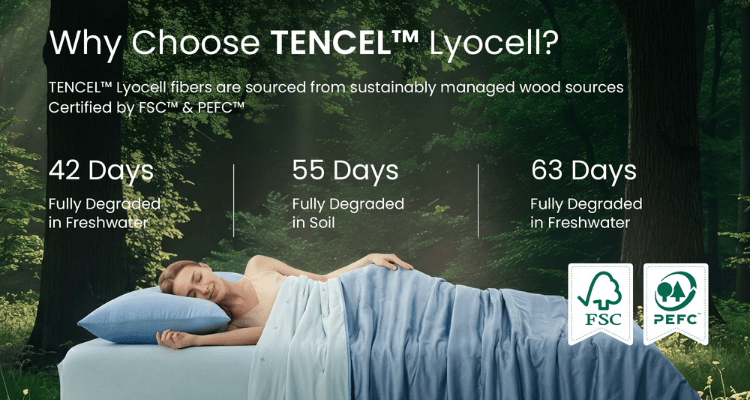
TENCEL Lyocell is a regenerated cellulosic fiber made from wood-based cellulose. According to Lenzing, the wood used comes from certified or controlled sources, and the fibers are produced through a closed-loop process that recovers more than 99.8% of the solvent used during production.
That said, not every TENCEL bedding product will feel exactly the same. Fabric construction, finishing, product design, and the actual percentage of TENCEL fibers can all affect the final result. Checking the fiber content and product specifications is more useful than relying only on broad claims such as “soft,” “eco-friendly,” or “cooling.”
Third-Party Recognition Adds Useful Context
Independent recognition can also provide another point of reference when shoppers are comparing unfamiliar bedding options. Cozy Bliss’s TENCEL collection received recognition from Parents’ Picks in 2026, including categories related to family products and products for moms.
Awards should not replace checking the actual fabric composition or product construction, but they can add useful third-party context around comfort, practicality, and everyday family use. Parents’ Picks’ 2026 selections can be viewed through its family product awards and mom product awards.
For shoppers exploring TENCEL bedding for the first time, this kind of recognition can sit alongside more concrete information such as fiber source, product composition, and actual sleep feel.
Who Is Most Likely to Notice the Difference?
TENCEL bedding may stand out most to people who are particularly sensitive to texture or dislike bedding that begins to feel damp, heavy, or stuffy overnight. Someone who prefers a smooth sleep surface may notice the difference quickly in TENCEL sheets or pillowcases, while someone who dislikes rigid fabrics may appreciate the softer drape of a duvet cover or comforter.
It can also make sense for family bedrooms where bedding needs to balance comfort with everyday practicality. The appeal does not come from one exaggerated claim, but from several smaller qualities working together: smoothness, moisture management, softness, and a clearly identified fiber source.
If those qualities are already priorities in your household, TENCEL bedding is likely to feel more distinctive than it would to someone who prefers a crisp or highly structured sleep surface.
Is TENCEL Bedding Better Than Regular Bedding?

Not universally.
“Regular bedding” covers too many different materials to make a blanket claim. Some people prefer bedding that feels crisp and structured, while others want something softer, smoother, and more fluid. The better choice depends on what kind of sleep you personally enjoy.
TENCEL bedding is most compelling when you specifically value a smooth hand feel, effective moisture management, softer drape, and clear material sourcing. In that case, the difference can be noticeable both when you first touch the fabric and after several hours of actual use.
So the more useful question is not whether TENCEL is “better than everything else,” but whether its particular feel and performance match what you want from your bed. For a broader look at how those qualities fit into family use, our earlier family sleep guide provides more context.
FAQs
What is the difference between TENCEL and Lyocell?
Lyocell is a type of regenerated cellulosic fiber. TENCEL is Lenzing’s fiber brand, and TENCEL Lyocell refers specifically to Lyocell fibers produced under the TENCEL brand.
Are TENCEL sheets soft?
Yes. TENCEL Lyocell fibers are naturally smooth and soft to the touch, which is one of the material’s most recognizable characteristics.
Do TENCEL sheets feel slippery?
They usually feel smooth and fluid, but not necessarily slippery. The exact feel depends on the weave, finishing, and construction of the sheet set.
Is TENCEL bedding good for people who dislike stuffy bedding?
It can be a good option because TENCEL Lyocell supports moisture management, which can help the sleep surface feel drier and less clammy. It should not, however, be treated as an active cooling system.
Is TENCEL bedding worth it?
It may be worth considering if you value smoothness, moisture control, softer drape, and a clearly identified wood-based fiber source. The final decision should still depend on the specific product construction and your own sleep preferences.


Dejar un comentario
Este sitio está protegido por hCaptcha y se aplican la Política de privacidad de hCaptcha y los Términos del servicio.