
As dogs get older, everyday movements can become more difficult. You may notice your dog taking longer to stand up, hesitating before climbing onto the sofa, or changing sleeping positions more often during the night. These changes do not always mean something is seriously wrong, but they can be signs that your pet needs a more supportive and accessible place to rest.
A good orthopedic dog bed for senior dogs cannot treat arthritis or replace veterinary care. It can, however, create a more comfortable resting area by providing stable cushioning, easier access, and better support than a thin or overly soft bed.
Here is what matters when choosing an orthopedic bed for an aging pet.
What Makes a Dog Bed Orthopedic?

The word “orthopedic” is used widely, but not every thick dog bed offers the same level of support.
A proper orthopedic pet bed usually contains a structured foam core rather than loose fiber filling alone. Memory foam and egg-crate foam are common choices because they distribute weight across the sleeping surface and help reduce concentrated pressure beneath areas such as the hips, shoulders, and elbows.
VCA Animal Hospitals recommends considering an orthopedic or memory foam bed as part of a comfortable sleeping setup for dogs with osteoarthritis. The American Animal Hospital Association also includes orthopedic bedding among the home modifications that may help older pets with mobility challenges.
The bed should feel supportive without being so firm that your dog avoids it. It also should not collapse completely under your dog’s weight.
Look for Support That Matches Your Dog’s Size
Foam thickness matters, but thicker is not automatically better. A small dog and a large breed place very different amounts of pressure on a bed.
For a larger or heavier dog, the foam needs enough density and depth to prevent the body from sinking through to the floor. Smaller senior dogs may not require the same thickness, but they still benefit from a surface that stays stable when they turn, stretch, or stand up.
Measure your dog while they are resting in their usual position. The bed should allow them to lie on their side without their head, legs, or hips extending beyond the sleeping surface.
A bed that is too small may force the dog into a curled position, while an oversized bed may take up unnecessary space and feel less enclosed to pets that prefer resting against an edge.
Make Sure the Bed Is Easy to Enter
Older dogs may struggle with high edges, steep bolsters, or raised furniture. VCA advises choosing bedding that does not require a mobility-compromised dog to climb onto or over a high side.
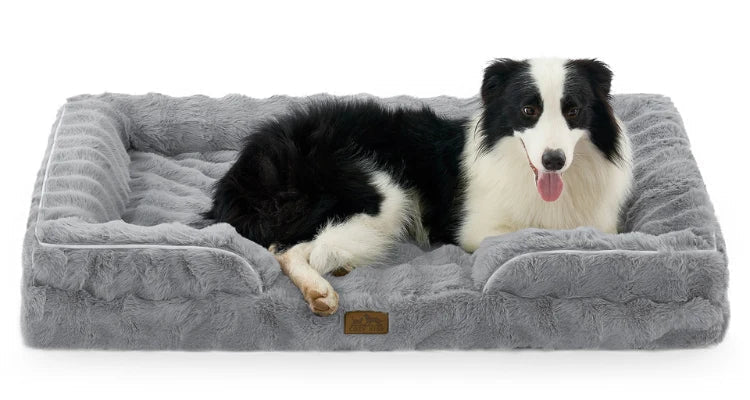
A low front opening can make a noticeable difference for dogs with stiff joints or reduced balance. Raised sides can still be useful because many dogs enjoy resting their heads against a bolster, but there should be a clear entry point.
The Cozy Bliss Leakproof U-Shaped Orthopedic Dog Bed, for example, combines three raised sides with an open front. The U-shaped design gives dogs a supported place to lean their head or back while keeping the main entrance low and accessible.
This type of design can work well for dogs that enjoy the security of bolsters but no longer want to step over a high edge every time they lie down.
Consider Temperature as Well as Cushioning
Senior dogs do not all have the same comfort needs. Some seek out warm, plush surfaces, while others prefer cooler floors and may avoid beds that retain too much heat.
For warmer rooms or dogs that tend to overheat, look for breathable upholstery or a cooling orthopedic dog bed. VCA specifically notes that bedding for dogs with limited mobility should avoid retaining excessive heat, particularly in warmer climates.
A cooling surface does not mean the bed has to feel thin or unsupportive. It can still include an orthopedic foam core beneath a more breathable top layer.
During colder months, a lightweight pet blanket can be added rather than replacing the entire bed with a heavily insulated one.
Choose a Washable, Leak-Resistant Design

Senior dogs may bring more dirt into the bed, drool while sleeping, or experience occasional accidents. A removable, machine-washable cover makes regular cleaning much easier.
A waterproof or leak-resistant liner is equally important because washing the outer cover will not help if moisture has already reached the foam. Once liquid soaks into the foam core, it can be difficult to clean and dry completely.
The Cozy Bliss orthopedic dog bed includes a removable cover and protective lining, helping keep everyday spills and accidents away from the foam. A nonslip base also helps the bed remain more stable on hardwood or tile, where an older dog may already feel less secure.
Before washing any pet bed, follow its care label rather than assuming every cover, liner, or foam insert can be cleaned in the same way.
Place the Bed Where Your Dog Already Rests
Even the best orthopedic dog bed will not help if it is placed somewhere your dog rarely visits.
Older pets often prefer to stay near family members rather than resting alone in a distant room. Place the bed in a quiet but familiar area, away from cold drafts and busy walkways. In a multi-level home, it may be useful to have more than one resting area so your dog does not need to use the stairs whenever they want to lie down.
VCA also recommends creating comfortable resting places close to the people and areas a dog enjoys.
Give your dog time to adjust. Placing a familiar blanket or toy on the new bed can make it feel less unfamiliar.
When a New Bed Is Not Enough
A supportive bed may improve everyday comfort, but it should not be used to explain away sudden mobility changes.
Difficulty standing, limping, reluctance to use stairs, repeated circling before lying down, or visible discomfort when changing position can be associated with pain or mobility problems. These signs should be discussed with a veterinarian, especially when they appear suddenly or continue to worsen.
An orthopedic bed works best as one part of a broader senior-dog care plan that may also include veterinary evaluation, appropriate exercise, weight management, nonslip flooring, ramps, or other home adjustments.
FAQs
Are orthopedic dog beds only for senior dogs?
No. They can also suit large breeds, highly active dogs, pets recovering under veterinary guidance, or dogs that simply prefer a more structured sleeping surface.
Is memory foam or egg-crate foam better for dogs?
Both can provide support. The overall density, thickness, construction, and suitability for your dog’s weight matter more than the material name alone.
Are raised sides good for older dogs?
They can provide a comfortable headrest and a sense of security. Choose a design with a low or open entrance so the dog does not have to climb over the bolster.
How often should an orthopedic dog bed be washed?
Wash the removable cover whenever it becomes dirty or develops an odor. Dogs with allergies, frequent shedding, or occasional accidents may need more frequent cleaning.
Can an orthopedic dog bed treat arthritis?
No. A bed may provide a more supportive resting surface, but it does not diagnose or treat arthritis. Persistent stiffness, pain, or reduced mobility should be evaluated by a veterinarian.


Hinterlasse einen Kommentar
Diese Website ist durch hCaptcha geschützt und es gelten die allgemeinen Geschäftsbedingungen und Datenschutzbestimmungen von hCaptcha.